Michelle Brown has crossed many thresholds already, scientific, ethical, emotional, but Chapter Eleven is the moment she crosses into the impossible.
Still reeling from AASID’s attempted seizure of her project, Michelle prepares to awaken the subject early. It’s no longer a scientific decision. It’s a political maneuver, the only way to invoke citizenship protections before AASID can disappear her work.
But the real shock comes when Holi decrypts the AASID scan.
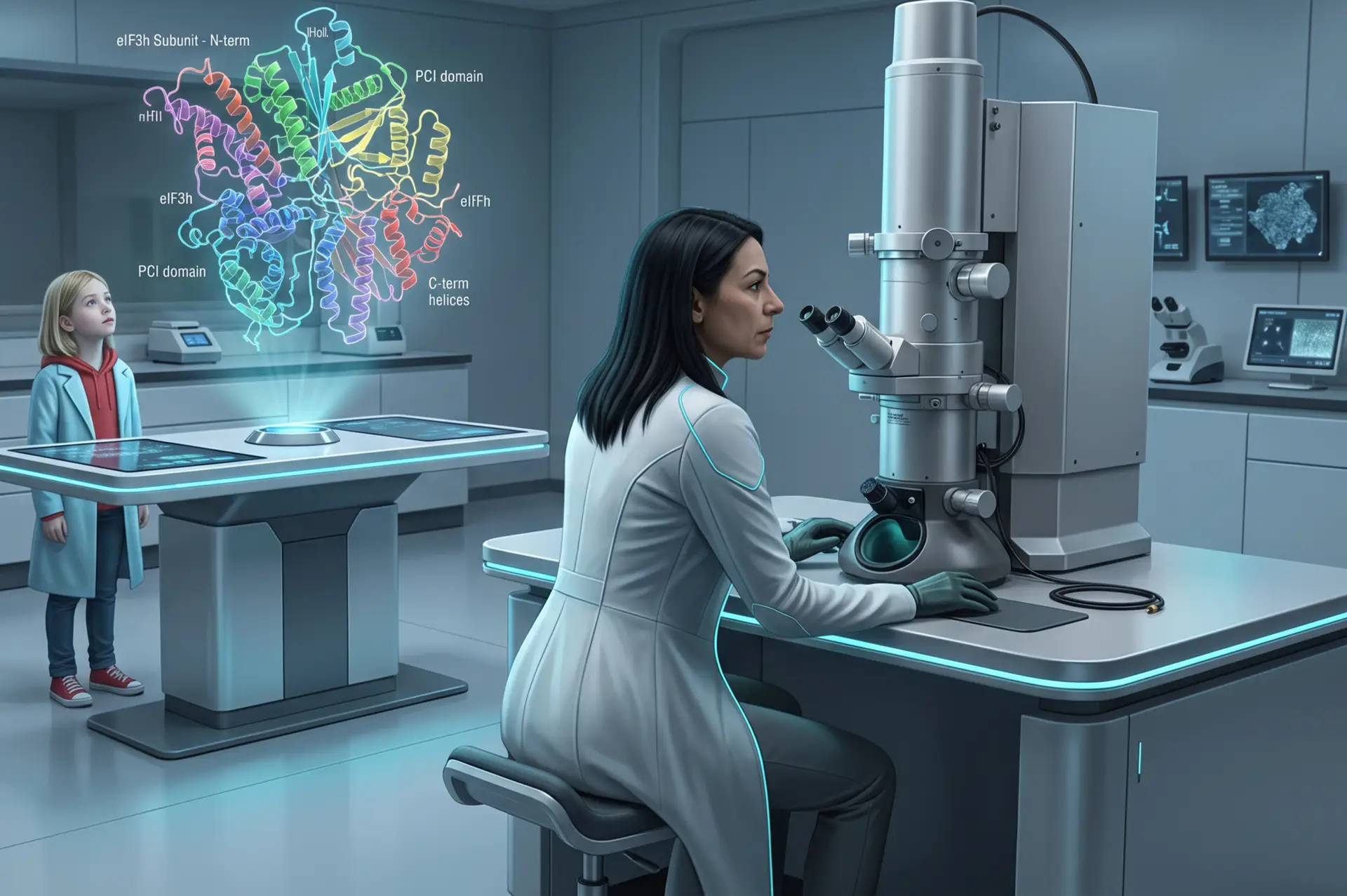
The subject contains antibodies for TMVid48, the virus that devastated Earth, despite dying before it existed. “Every cell in her body produces them,” Holi reports. The source is the same anomaly Michelle previously dismissed: ribosome activity in the eIF3h sub-unit.
Then Holi finds something stranger: a nearly destroyed bio-polymer microfilm embedded in the patient’s arm. Only three words remain legible: “Jason Robinson” and “17 November 1763.” Michelle freezes. That name. That date. The past is no longer distant, it’s encoded.
Michelle orders tissue samples scanned in Mendel’s legacy labs, hoping analog equipment can reveal what AI systems cannot. Under the electron microscope, she sees it: a microscopic nanite hidden inside the ribosome. Ancient. Technological. Impossible. The same aberration AASID detected.
Holi confirms the match. AASID knew exactly what to look for.
Before Michelle can process the implications, Holi detects a subatomic energy surge across the nanites in every cell. Then: collapse. Apoptosis. The tissue disintegrates. “The scan triggered it,” Holi whispers.
Michelle adds an encrypted addendum to Project 2169–0125.04 documenting the nanite’s presence, and vows to uncover the truth.
Because the subject is awake now.
And so is the past.
Teaser question: What do you do when the first proof of alien technology in human biology destroys itself the moment you try to understand it?