



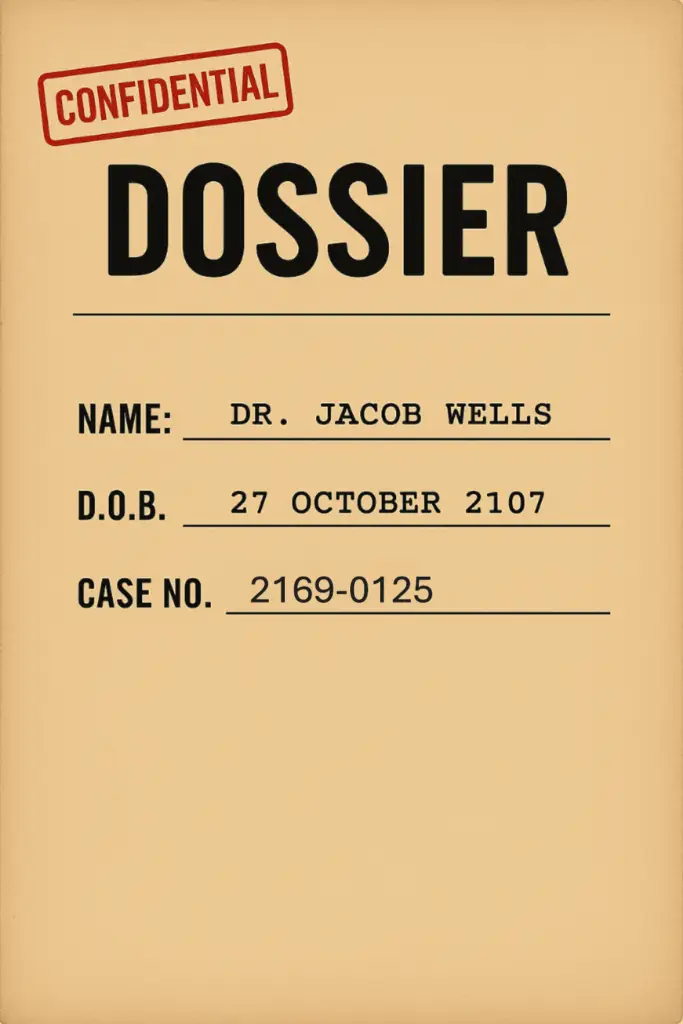








The investigation into the disappearance of Dr Jacob Wells identified several critical forensic and digital indicators suggesting a violent confrontation, deliberate electronic interference, and non‑voluntary removal from the residence. Key findings include:
• Biological Evidence
• Bloodstain Pattern Analysis
• Latent Prints & Trace Evidence
• Digital & Network Forensics
• Property & Missing Items
• Witness & Access Indicators

Purpose: Establish whether an injury occurred, identify the victim, and assess severity.
Content:
Major blood deposits found in Zones A and B.
DNA profiling confirmed the blood belonged to Dr Jacob Wells.
Volume and distribution indicate significant blood loss consistent with serious bodily injury.
Additional low‑level mixed biological material detected; interpretation pending laboratory analysis.
Expanded Description: Biological evidence provides the first confirmation that Dr Wells suffered a substantial injury inside the residence. The concentration of blood in the living area suggests a primary event occurred there. DNA confirmation establishes Dr Wells as the injured party, while the presence of minor mixed profiles may indicate secondary contact or environmental transfer. Laboratory serology will determine whether the blood volume is compatible with survivability.

Purpose: Reconstruct the nature of the confrontation, directionality, and possible movement.
Content:
Passive pooling in the living area.
Transfer staining on furniture surfaces.
Projected patterns consistent with impact or force.
No final BPA opinion yet; specialist analysis pending.
Expanded Description: Preliminary BPA indicates a violent event occurred in Zone B. Passive pools suggest a stationary bleeding source, while transfer stains imply contact with furniture or movement through the area. Projected patterns may indicate blows or rapid movement. Without full analysis, investigators cannot yet determine the number of impacts, weapon type, or whether Dr Wells was restrained or mobile during the event.

Purpose: Identify persons present, reconstruct handling of objects, and detect foreign materials.
Content:
Partial latent prints on console housing, doorframe, and lounge furniture.
Identifiable prints belonging to Dr Wells and Dr Michelle Brown.
Several impressions lacked sufficient ridge detail for identification.
Fibre and particulate trace collected from chair and floor.
Expanded Description: Latent prints help establish who interacted with surfaces in the residence. Dr Brown’s prints in the lounge area are significant but not conclusive without timeline verification. Partial prints may belong to additional individuals but require enhancement. Trace evidence such as fibres or particulates may reveal contact with clothing, tools, or external environments, and can help determine whether an offender was present

Purpose: Determine whether electronic systems were tampered with, disabled, or corrupted.
Content:
Communications terminal physically disabled.
Smart‑home ecosystem offline; last diagnostic ping at 03:47.
Security logs corrupted between 03:30–04:00.
Last viable interior surveillance frame timestamped 03:29.
Internal data storage damaged by hardware breach or electrical overload.
Expanded Description: Digital forensics strongly indicate deliberate interference. The destruction of the communications terminal suggests intentional suppression of outgoing contact. The corrupted logs and missing motion‑event records point to targeted deletion or manipulation. The blackout period aligns with the suspected time of the confrontation. Recovery of metadata may reveal access attempts, device tampering, or external network intrusions.

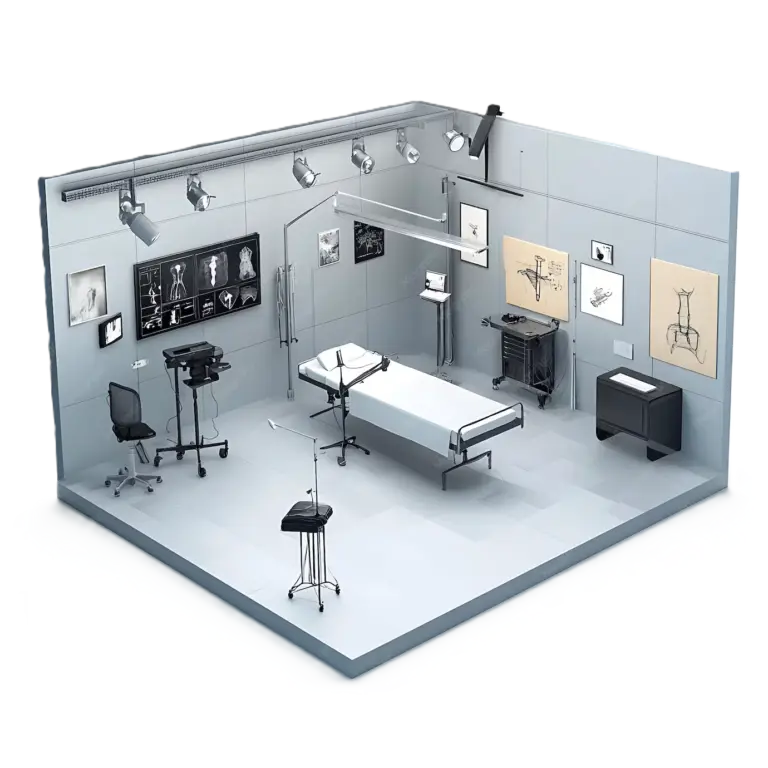
Purpose: Establish the physical state of the residence, identify signs of disturbance, and determine whether entry was forced or facilitated.
Content:
No signs of forced entry at the apartment door or frame.
Biometric lock last authenticated at 02:42 on 21 April 2169.
Living area in selective disorder; sleeping quarters undisturbed.
Communications console physically damaged.
Smart‑home system offline; ambient lighting manually overridden.
Security system logs missing between 03:30–04:00 hours.
Expanded Description: Scene condition provides the foundational context for interpreting all other forensic evidence. The absence of forced entry suggests the offender either used a legitimate access method, coerced entry, or exploited a compromised credential. The selective disorder — concentrated in the living area and workstation — indicates a targeted confrontation rather than a full ransacking. The intact sleeping quarters imply the event was confined to a specific zone. The damaged communications console and offline smart‑home system point to deliberate disabling of electronic infrastructure, likely intended to prevent calls for help or erase digital traces. The corrupted security logs during the critical window reinforce the hypothesis of intentional interference.

Purpose: Identify items removed, stolen, or used during the incident.
Content:
Wallet, ID card, and keycard left behind — inconsistent with voluntary departure.
Cryo‑case normally stored in the apartment missing.
Selected technology items removed.
Expanded Description: The absence of essential personal effects strongly suggests Dr Wells did not leave voluntarily. The missing cryo‑case is a major investigative lead, as it may contain sensitive materials or equipment. Selective removal of technology implies a targeted motive rather than opportunistic theft. Inventory and movement logs will help determine when the cryo‑case was taken and by whom.

Purpose: Establish timeline, access routes, and persons of interest.
Content:
No forced entry; biometric lock last used at 02:42 on 21 April.
Witnesses confirm Dr Wells’s movements earlier in the evening.
Dr Michelle Brown’s presence at the institute partially corroborated.
Multiple persons identified for follow‑up interviews.
Expanded Description: Access indicators show the offender likely used a known or compromised entry method. Witness statements help refine the timeline and identify individuals with opportunity or motive. The absence of forced entry suggests either consent, coercion, or credential misuse. Interviews and access logs from Mendel Institute, DSP Facility, and Global Robotics remain critical to reconstructing Dr Wells’s final movements.


Dr Wells was observed leaving Deep Space Program Facility after a late meeting with Dr Ian Spears. Witnesses report he appeared calm and unhurried.

Entry authenticated under Dr Wells’s credentials. No subsequent exit recorded, suggesting he remained inside or the system was compromised.
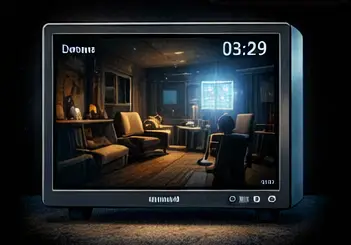
Interior camera shows partial movement near the living area before the feed abruptly terminates. Lighting anomalies noted.

All smart‑home systems and network logs corrupted. Forensic analysis indicates deliberate interference or physical destruction of hardware.

A caller reported “shouting and metallic impacts” from the direction of Orlan Crescent. The call was traced to a public terminal; identity unknown.
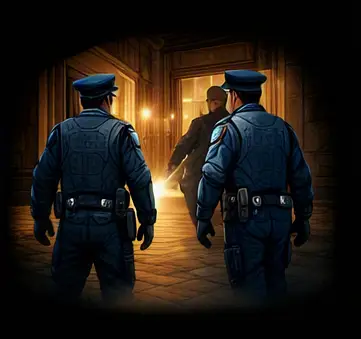
Responding units found the apartment door unlocked, interior lights off, and visible blood deposits. No sign of Dr Wells.

Major Crimes Division secured the scene. Biological samples, digital devices, and trace materials collected for laboratory analysis.

Lead investigator Detective Steven Wayne assigned. Witness interviews initiated and cross‑referenced with Mendel Institute access logs.

Search warrants issued for associated facilities. Digital reconstruction and blood pattern analysis underway. Dr Wells remains missing.


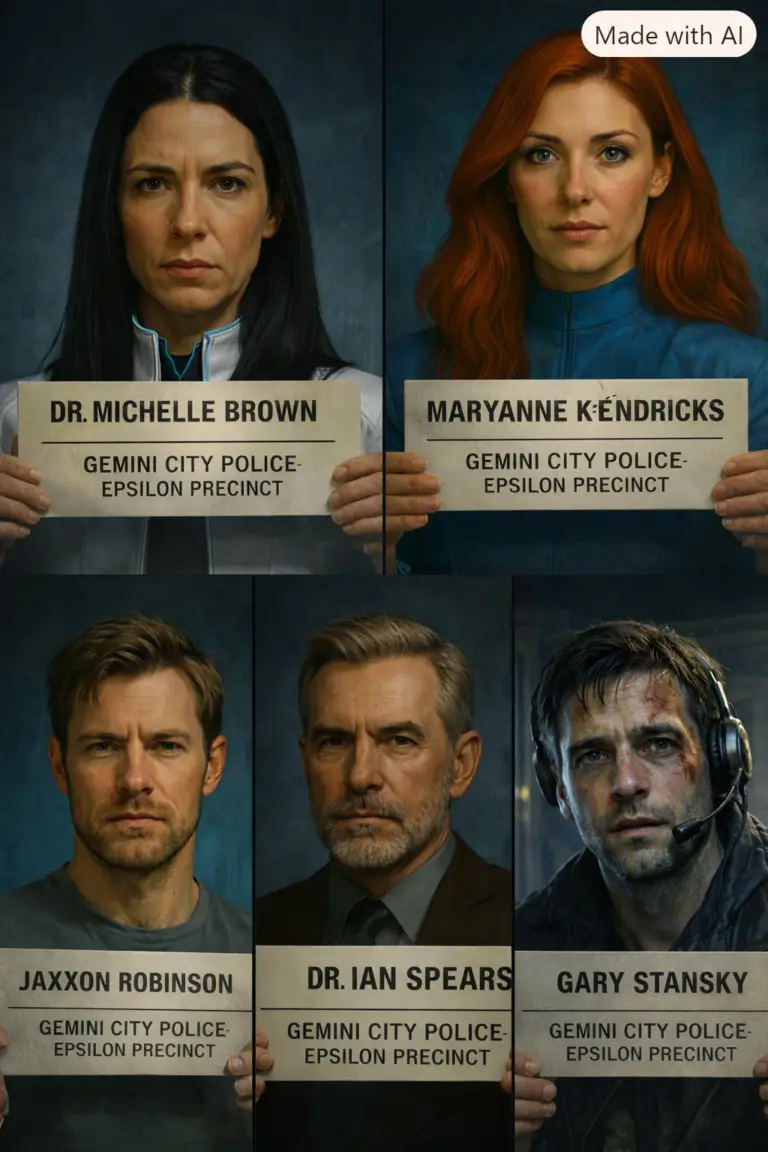
The following profiles outline individuals whose proximity to Dr Jacob Wells, access to critical facilities, or involvement in related research place them within the scope of the Epsilon Precinct investigation. Each entry reflects verified opportunity, potential motive, and the current evidentiary position based on interviews, forensic findings, and institutional records. While no direct offender has yet been identified, these persons remain central to reconstructing the events leading to Dr Wells’s disappearance.

A senior researcher at the Mendel Institute, Dr Brown had unrestricted access to all facility areas and was directly involved in the same projects as Dr Wells. Her DNA and fingerprints were recovered at the crime scene. Although she denies involvement and claims to have remained at the institute overnight, prior conflict with Dr Wells and a withdrawn manslaughter charge place her under continued scrutiny. Witness statements partially corroborate her account but do not eliminate suspicion.

A patient at the Mendel Institute and participant in Dr Wells’s research program, Ms Kendricks interacted with him shortly before his disappearance. Her statements are fragmented and inconsistent, likely due to sedation and disorientation, yet her presence during the critical hours and emotional distress make her testimony significant. No evidence currently places her at Dr Wells’s residence, but her role remains under review.


A senior operative at Global Robotics, Mr Stansky directed Dr Wells to a GRInd network technician known as “Jonesy” shortly before the disappearance. He later claimed to have seen both individuals leaving together and has not seen either since. Stansky’s report of unusual network traffic preceding the incident remains unverified, but his proximity to sensitive infrastructure and inconsistent disclosures sustain investigative interest.

Lorem ipsum dolor sit amet, consectetur adipiscing elit. Ut elit tellus, luctus nec ullamcorper mattis, pulvinar dapibus leo.

The disappearance of Dr Jacob Wells remains unresolved. Despite extensive forensic analysis, cross‑institutional interviews, and digital reconstruction of the timeline, no definitive offender or method of removal has been established. The evidence collected to date points toward coordinated interference across multiple research facilities, suggesting that the event may extend beyond an isolated act of violence. The Epsilon Precinct investigation continues to treat this case as active and high‑priority..
All personnel assigned to Case 2169‑0125 are instructed to:
Maintain surveillance on all identified persons of interest.
Continue forensic correlation between Mendel Institute, Deep Space Program Facility, and Global Robotics data streams.
Submit any new biometric, network, or witness evidence directly to Major Crimes Division for immediate review.
Reassess motive hypotheses in light of emerging data from the GRInd network and Deep Space Program archives.
Members of the public with credible information regarding Dr Wells’s movements between 21 and 22 April 2169 are urged to contact the Gemini City Police – Epsilon Precinct confidential tip line. Anonymous submissions will be accepted and processed under secure protocol.
Contact: Gemini City Police – Epsilon Precinct
This report represents the culmination of all verified evidence as of 03 August 2169. The investigation remains open. The Epsilon Precinct Major Crimes Division reaffirms its commitment to uncovering the truth behind Dr Wells’s disappearance and ensuring accountability for all parties involved. Every detail matters – every witness counts.
Notifications